Finished building your earthquake proof tower? Tomorrow's volcano worksheet completed? Well then, try out one of the earth science simulations below!
Mrs. Loehe
Tectonic Plate Interactive
Showing posts with label Earth Science. Show all posts
Showing posts with label Earth Science. Show all posts
Monday, May 18, 2015
Friday, May 15, 2015
I don't know where I'm a gonna go...
...WHEN THE VOLCANO BLOWS!
Want to learn more about how lava flows down soft and hot? Well, below are some very helpful and fun links to explore in order to complete your Volcano worksheet for Tuesday, May 19th. You may also use Google to help you on your learning endeavors!
Mrs. Loehe
Volcano Explorer
Volcanic Eruptions
VOLCANOES
Want to learn more about how lava flows down soft and hot? Well, below are some very helpful and fun links to explore in order to complete your Volcano worksheet for Tuesday, May 19th. You may also use Google to help you on your learning endeavors!
Mrs. Loehe
Volcano Explorer
Volcanic Eruptions
VOLCANOES

Thursday, May 7, 2015
Why was Earth crying over the theory of continental drift?
Because it meant all of her plates were broken!
Now that you've sufficiently groaned over my joke -which I am very proud of, by the way- take a look at some introductory notes on plate boundaries!
Mrs. Loehe


Now that you've sufficiently groaned over my joke -which I am very proud of, by the way- take a look at some introductory notes on plate boundaries!
Mrs. Loehe


Friday, June 6, 2014
Monday, June 2, 2014
Tuesday, May 27, 2014
Website Rubric
| Web Site Design : Earth Science | ||||
| Teacher Name: Ms. Schmitz | ||||
| Student Name: ________________________________________ | ||||
| CATEGORY | 4 | 3 | 2 | 1 |
| Work Ethic | Student always uses classroom project time well. Conversations are primarily focused on the project and things needed to get the work done and are held in a manner that typically does not disrupt others. | Student usually uses classroom project time well. Most conversations are focused on the project and things needed to get the work done and are held in a manner that typically does not disrupt others. | Student usually uses classroom project time well, but occasionally distracts others from their work. | Student does not use classroom project time well OR typically is disruptive to the work of others. |
| Content | The site has a well-stated clear purpose and theme that is carried out throughout the site. It goes above and beyond expectations (1 background page, 5 additional pages). | The site has a clearly stated purpose, theme and meets the minimum requirements (1 background page, 5 additional pages). However, may have one or two elements that do not seem to be related to it. | The purpose and theme of the site is somewhat muddy or vague. An information page or two is missing. | The site lacks a purpose and theme. Multiple informational pages are missing. |
| Content Accuracy | All information provided by the student on the Web site is accurate and all the requirements of the assignment have been met. This means that there is one DETAILED background page about your Earth Science topic and five additional, detailed, informational pages about your topic. | All requirements of the assignment have been met. However, some of the information included on the Earth Science topic is vague and inaccurate. | All pages include information about the chosen Earth Science topic; however, there are inaccuracies, inconsistencies, or vague details throughout the pages. | There are several inaccuracies in the content provided by the students and many of the requirements were not met to give other students a better understanding of your Earth Science Topic. |
| Learning of Material | The student has an exceptional understanding of the material included in the site and where to find additional information. Can easily answer questions about the Earth Science content and procedures used to make the web site. | The student has a good understanding of the material included in the site. Can easily answer questions about the Earth Science content and procedures used to make the web site. | The student has a fair understanding of the material included in the site. Can easily answer most questions about the Earth Science content and procedures used to make the web site. | Student did not appear to learn much from this project. Cannot answer most questions about the Earth Science content and the procedures used to make the web site. |
| Interest | The author has made an exceptional attempt to make the content of this Web site interesting to the people for whom it is intended. | The author has tried to make the content of this Web site interesting to the people for whom it is intended. | The author has put lots of information in the Web site but there is little evidence that the person tried to present the information in an interesting way. | The author has provided only the minimum amount of information and has not transformed the information to make it more interesting to the audience (e.g., has only provided a list of links to the content of others). |
| Navigation | Links for navigation are clearly labeled, consistently placed, allow the reader to easily move from a page to related pages (forward and back), and take the reader where s/he expects to go. A user does not become lost. | Links for navigation are clearly labeled, allow the reader to easily move from a page to related pages (forward and back), and internal links take the reader where s/he expects to go. A user rarely becomes lost. | Links for navigation take the reader where s/he expects to go, but some needed links seem to be missing. A user sometimes gets lost. | Some links do not take the reader to the sites described. A user typically feels lost. |
| Graphics | Graphics are related to the theme/purpose of the site, are thoughtfully cropped, are of high quality and enhance reader interest or understanding. | Graphics are related to the theme/purpose of the site, are of good quality and enhance reader interest or understanding. | Graphics are related to the theme/purpose of the site, and are of good quality. | Graphics seem randomly chosen, are of low quality, OR distract the reader. |
| Copyright | Fair use guidelines are followed with clear, easy-to-locate and accurate citations for all borrowed material. No material is included from Web sites that state that permission is required unless permission has been obtained. | Fair use guidelines are followed with clear, easy-to-locate and accurate citations for almost all borrowed material. No material is included from Web sites that state that permission is required unless permission has been obtained. | Fair use guidelines are followed with clear, easy-to-locate and accurate citations for most borrowed material. No material is included from Web sites that state that permission is required unless permission has been obtained. | Borrowed materials are not properly documented OR material was borrowed without permission from a site that requires permission |
| Presentation | Presentation is outstanding and highly engaging. It meets the 5-8 minute time limit. | Presentation of the site is done nicely and meets time requirements; however, it lacks some interest and engagement. OR It does not meet time requirements, despite being engaging and interesting. | Presentation has some interest and preparation, and lacks in meeting the time requirements. | Presentation is too brief and does not introduce any new information to the audience. |
Trifold Presentation Rubric
| Oral Presentation Rubric : Earth Science | ||||
| Teacher Name: Ms. Schmitz | ||||
| Student Name: ________________________________________ | ||||
| CATEGORY | 4 | 3 | 2 | 1 |
| Work Ethic | Student always uses classroom project time well. Conversations are primarily focused on the project and things needed to get the work done and are held in a manner that typically does not disrupt others. | Student usually uses classroom project time well. Most conversations are focused on the project and things needed to get the work done and are held in a manner that typically does not disrupt others. | Student usually uses classroom project time well, but occasionally distracts others from their work. | Student does not use classroom project time well OR typically is disruptive to the work of others. |
| Comprehension | Student is able to accurately answer almost all questions posed by classmates about the Earth Science topic. | Student is able to accurately answer most questions posed by classmates about the Earth Science topic. | Student is able to accurately answer a few questions posed by classmates about the Earth Science topic. | Student is unable to accurately answer questions posed by classmates about the Earth Science topic. |
| Enthusiasm | Facial expressions and body language generate a strong interest and enthusiasm about the topic in others. | Facial expressions and body language sometimes generate a strong interest and enthusiasm about the topic in others. | Facial expressions and body language are used to try to generate enthusiasm, but seem somewhat faked. | Very little use of facial expressions or body language. Did not generate much interest in topic being presented. |
| Preparedness | Student is completely prepared and has obviously rehearsed and has knowledge of their chosen topic. | Student seems pretty prepared but might have needed a couple more rehearsals to better understand their topic and present it. | The student is somewhat prepared, but it is clear that rehearsal was lacking for presenting their topic. | Student does not seem at all prepared to present. |
| Time-Limit | Presentation is 5-8 minutes long. | Presentation is 4-5 minutes long. | Presentation is 3 minutes long. | Presentation is less than 3 minutes OR more than 10 minutes long. |
| Sources | Source information collected for all graphics, facts and quotes. All documented in desired format. | Source information collected for all graphics, facts and quotes. Most documented in desired format. | Source information collected for graphics, facts and quotes, but not documented in desired format. | Very little or no source information was collected. |
| Posture and Eye Contact | Stands up straight, looks relaxed and confident. Establishes eye contact with everyone in the room during the presentation. | Stands up straight and establishes eye contact with everyone in the room during the presentation. | Sometimes stands up straight and establishes eye contact. | Slouches and/or does not look at people during the presentation. |
| Poster: Content - Accuracy | At least 7 accurate facts are displayed on the poster that relate to the oral presentation and chosen Earth Science topic. | 5-6 accurate facts are displayed on the posterthat relate to the oral presentation and chosen Earth Science topic. | 3-4 accurate facts are displayed on the posterthat relate to the oral presentation and chosen Earth Science topic. | Less than 3 accurate facts are displayed on the posterthat relate to the oral presentation and chosen Earth Science topic. |
| Poster Attractiveness | The poster is exceptionally attractive in terms of design, layout, and neatness. | The poster is attractive in terms of design, layout and neatness. | The poster is acceptably attractive though it may be a bit messy. | The poster is distractingly messy or very poorly designed. It is not attractive. |
Video/Cartoon Rubric
| Multimedia Project : Earth Science | ||||
| Student Name: ________________________________________ | ||||
| CATEGORY | 4 | 3 | 2 | 1 |
| Work Ethic | Student always uses classroom project time well. Conversations are primarily focused on the project and things needed to get the work done and are held in a manner that typically does not disrupt others. | Student usually uses classroom project time well. Most conversations are focused on the project and things needed to get the work done and are held in a manner that typically does not disrupt others. | Student usually uses classroom project time well, but occasionally distracts others from their work. | Student does not use classroom project time well OR typically is disruptive to the work of others. |
| Content | Covers topic in-depth with details and examples. Subject knowledge of chosen Earth Science topic is excellent. | Includes essential knowledge about the topic. Subject knowledge on Earth Science topic appears to be good. | Includes essential information about the chosen Earth Science Topic topic but there are 1-2 factual errors. | Content is minimal OR there are several factual errors. |
| Content Accuracy | All information provided by the student on the videos are accurate and all the requirements in researching and presenting the topic are met. | All requirements of the assignment have been met. However, some of the information included on the Earth Science topic is vague and inaccurate. | All pages include information about the chosen Earth Science topic; however, there are inaccuracies, inconsistencies, or vague details throughout the videos | There are several inaccuracies in the content provided by the students and many of the requirements were not met to give other students a better understanding of your Earth Science Topic. |
| Learning of Material | The student has an exceptional understanding of the material included in the videos and added additional information. Can easily answer questions about the Earth Science content. | The student has a good understanding of the material included in the videos. Can easily answer questions about the Earth Science content.. | The student has a fair understanding of the material included in the video. Can easily answer most questions about the Earth Science content. | Student did not appear to learn much from this project. Cannot answer most questions about the Earth Science content. |
| Interest | The author has made an exceptional attempt to make the content of this video interesting to the people for whom it is intended. | The author has tried to make the content of this video interesting to the people for whom it is intended. | The author has put lots of information in the Web site but there is little evidence that the person tried to present the information in an interesting way. | The author has provided only the minimum amount of information and has not transformed the information to make it more interesting to the audience (e.g., has only provided a list of links to the content of others). |
| Research, Writing, and Editing | Student clearly worked independently on the video project. Can troubleshoot on their own. Did all script writing, editing, and research on their own. | Student attempted to do most of the work independently but did require help. | Student needed consistent help in the indepent research, writing, and editing processes. | Student did very little work on their own. Always required the help of others. Did not work independently as required. |
| Presentation | Well-rehearsed with smooth delivery that holds audience attention. | Rehearsed with fairly smooth delivery that holds audience attention most of the time. | Delivery not smooth, but able to maintain interest of the audience most of the time. | Delivery not smooth and audience attention often lost. |
| Requirements | All requirements are met and exceeded. Videos equal 8 minutes in length. Script and research are completed and submitted along with additional information. | All requirements are met. However, time limit is not quite met, but the script and research materials are handed in. | One requirement was not completely met. | More than one requirement was not completely met. |
| Sources | Source information collected for all graphics, facts and quotes. All documented in desired format. | Source information collected for all graphics, facts and quotes. Most documented in desired format. | Source information collected for graphics, facts and quotes, but not documented in desired format. | Very little or no source information was collected. |
Lab Demo Rubric
| Science Lab Demonstration : Earth Science Rubric | ||||
| Teacher Name: Ms. Schmitz | ||||
| Student Name: ________________________________________ | ||||
| CATEGORY | 4 | 3 | 2 | 1 |
| Work Ethic | Student always uses classroom project time well. Conversations are primarily focused on the project and things needed to get the work done and are held in a manner that typically does not disrupt others. | Student usually uses classroom project time well. Most conversations are focused on the project and things needed to get the work done and are held in a manner that typically does not disrupt others. | Student usually uses classroom project time well, but occasionally distracts others from their work. | Student does not use classroom project time well OR typically is disruptive to the work of others. |
| Idea | Independently identified an Earth Science topic or question which was interesting to the student and could be investigated or modeled. | Identified, with adult help, a question or topic which was interesting to the student and could be investigated or modeled. | Identified, with adult help, a question or topic which could be investigated or modeled. | Identified a question or topic that could not be tested/investigated/modeled or one that did not merit investigation. |
| Descripton of Procedure | Procedures for model or experiment were outlined in a step-by-step fashion that could be followed by anyone without additional explanations. No adult help was needed to accomplish this. | Procedures for model or experiment were outlined in a step-by-step fashion that could be followed by anyone without additional explanations. Some adult help was needed to accomplish this. | Procedures were outlined in a step-by-step fashion, but had 1 or 2 gaps that require explanation even after adult feedback had been given. | Procedures that were outlined were seriously incomplete or not sequential, even after adult feedback had been given. |
| Data Collection | Data was collected several times ahead of time or to help design model and outcomes. It was summarized, independently, in a way that clearly describes what was discovered from doing the experiment and/or research. | Data was collected more than one time before demonstration. It was summarized, independently, in a way that clearly describes what was discovered from doing the experiment and/or research. | Data was collected before the demonstration from doing the experiment or research. Adult assistance was needed to clearly summarize what was discovered. | Data was collected only once and adult assistance was needed to clearly summarize what was discovered. |
| Preparedness & Time Limit | Student is completely prepared and has obviously rehearsed their lab and understand their results and topic. Lab demonstration is 5-8 minutes long. | Student seems pretty prepared but might have needed more research and background knowledge in order to better present their lab demo. 4-5 minutes in length. | The student is somewhat prepared, but it is clear that practice demonstrations and background research may have been lacking. 3-4 minutes in length. | Student does not seem at all prepared to present. Demonstration is under 3 minutes in length. |
| Sources | Source information collected for creating the lab and background research was documented in desired format. | Source information collected for all background research. Most documented in desired format. | Source information collected for all background research/lab ideas, but not documented in desired format. | Very little or no source information was collected. |
| Comprehension | Student is able to accurately answer almost all questions posed by classmates about the Earth Science topic demonstration. | Student is able to accurately answer most questions posed by classmates about the Earth Science topic demonstration. | Student is able to accurately answer a few questions posed by classmates about the Earth Science topic demonstration. | Student is unable to accurately answer questions posed by classmates about the Earth Science topic demonstration. |
| Lab/Demonstration Content Accuracy | All information provided by the student is accurate and all the requirements in researching and presenting the topic are met. | All requirements of the assignment have been met. However, some of the information included on the Earth Science topic is vague and inaccurate. | All pages include information about the chosen Earth Science topic; however, there are inaccuracies, inconsistencies, or vague details throughout the videos | There are several inaccuracies in the content provided by the students and many of the requirements were not met to give other students a better understanding of your Earth Science Topic. |
| Writing and Editing Lab Demonstration | Student clearly worked independently on their lab. Can troubleshoot on their own. Did all lab writing, editing, and research on their own. | Student attempted to do most of the work independently but did require help. | Student needed consistent help in the indepent research, writing, and editing processes. | Student did very little work on their own. Always required the help of others. Did not work independently as required. |
Final Earth Science Project: Information and Links
Earth
Science: Final Assessment Project
(SCROLL DOWN FOR LINKAGE!)
Your objective is to choose a researchable and easily
investigated Earth Science related topic, to present in one of the formats
listed below, NO LATER THAN FRIDAY, JUNE 6th. On this day, we will begin
presenting and sharing your research/investigations in 5-8 MINUTE
presentations.
Today, you will look over this list and decided upon a
topic to research and investigate and also choose a presentation format. More
information of presentation formats can be found on the blog.
This is to be an individual project. You may complete
the research portion with a partner but ALL OTHER WORK AND THE PRESENTATION IS
TO BE DONE ON YOUR OWN! You will have the next two weeks of class to work on
your project. THE REST IS TO BE DONE ON YOUR OWN IF IT IS NOT COMPLETED IN
CLASS!
Presentation Formats
- · Write a lab activity or demonstration, test it, and complete a lab demonstration in front of the class. Make sure to have copies of the lab, collection of data from your tests for the teacher, and have all materials to present your lab to the class on presentation day. 5-8 minute presentation.
- · Create a series of FOUR, 2 minute cartoons, on GoAnimate.com. Scripts must be typed and shared, along with your research, the day of your presentation.
- · Create an 8 minute “Bill Nye: The Science Guy,” style video or PSA (Public Service Announcement) on your chosen topic area. Typed script and research papers must be shared the day of your presentation.
- · Tri-fold, poster board, oral presentation –may include models or media content- to present research topic, similar to the style of the 8th grade Science Fair projects. Reading off Powerpoint slides are not allowed, must have presentation memorized or written on notecards. 5-8 minute presentation.
- · Create a “kid-friendly” website using Google Sites, Wix, or another website creation tool, to inform other students about your topic area. Website must include an introduction page, along with five, additional, informational pages that are visually interesting. All content must be cited. 5-8 minute presentation.
PRESENTATION IDEAS>>>
- · Website/Video/Cartoon/Oral Presentation: Choose FIVE different volcanoes, earthquakes, or tsunamis to research. Discuss the types, size, history, location, and impact on environment and humans for each.
- · Lab: Choose one historically significant volcano, earthquake, or tsunami to research and recreate in a lab-based presentation. Must include background information and model that can recreate and demonstrate the impact of each.
- · Lab: Create a mini-model of an earthquake proof, wikihouse and an earthquake table to test it on. Explain how energy in earthquakes transfer and how your wikihouse absorbs that wave energy.
- · Lab: Create an erosion table. Demonstrate the impact of erosion on a chosen area in the United State. Examples of erosion that can cause landslides, mudslides, rockslides, devastation to wildlife habitats, and destruction to human life can generally be found along coastlines or at mountainsides.
- · Fault lines, seismic zones, and plate boundaries. Research and discuss or demonstrate the environmental and historical impact of famous fault lines or plate boundaries (ex. San Andreas, New Madrid, the Mid-Atlantic Ridge).
- · Research, investigate, and discuss or demonstrate how weathering and erosion on the shores of the Great Lakes can impact our fresh water and the wildlife in it.
- · Research, investigate, and discuss or demonstrate how glacial progressions throughout the Midwest have shaped our landscapes and have impacted organisms, the environment, and humans throughout history and today.
- · The Rock Cycle! Follow the life story of a variety of different rocks in the Rocky Cycle. Create a biography or autobiography of their “lives.”
STEP ONE:
Start at the BAYSIDE LMC PAGE! There are lots of useful links and places to visit, but the best place to get a little background knowledge is by using some of the ONLINE ENCYCLOPEDIAS!BRITANNICA ONLINE
Remember to record the name and URL for any websites you use or the title, author, and pages of any books!
STEP TWO:
Once you have gotten some background knowledge, do some more in depth research at the following places...Earthquakes
- US Geological Survey Earthquake Page
- IRIS Seismic Monitor and Headline Links
- FEMA Earthquake Homepage
- KidsGeo Earthquakes
- Earthquake Proof Housing
- More on Earthquake Proof Housing
- Earthbag Home: Earthquake and Tsunami Resistant
- Wikihouse Background
- US Geological Survey Volcano Page
- Volcano World
- San Diego State University: How Volcanoes Work
- Annenberg Learner: Volcanoes Interactive
Weathering, Erosion, Glaciation, and The Great Lakes
- NOAA: Glaciation
- UW Stevens Point: Glaciers
- Soil Erosion and Sedimentation in the Great Lakes
- USGS Topics: Weathering and Erosion
STEP THREE:
CITE YOUR SOURCES ON A WORKS CITED PAGE OR SLIDE! Using the URLs, titles, authors, and page numbers you have, begin to create citations, using the links below to copy and paste onto your WORKS CITED page. Use APA format!
Monday, May 19, 2014
Science News Monday & Geology Lab 2: FOSSIL DIG!
Today, you will be introduced to the fossil dig lab. Over the next few days, you will be outside working at your "dig site." Please dress for the weather!
-Mrs. Loehe
-Mrs. Loehe
Tuesday, May 13, 2014
Geology Lab One: Investigating Sedimentary Rocks from the Grand Canyon
Yesterday, you took notes about the three types of rocks and the rock cycle in which they are formed and changed. Today, you will be making observations on several examples of SEDIMENTARY rocks from the Grand Canyon. These rocks come from two separate canyons within the Grand Canyon. Using the pictures below, draw, color, and write some initial observations about the canyons below.
Nankoweap Canyon

North Canyon

Nankoweap Canyon
North Canyon
Monday, May 12, 2014
The ROCKIN' Rock Cycle
Happy Monday, sixth grade scientists! This week will be focusing on rocks, the rock cycle, and geological time in order to prepare for next week's fossil dig. After DNews, you and an you're team members will investigate the three types of rocks (Igneous, Metamorphic, and Sedimentary), and the cycle they go through on and within the earth.
You will find the instructions for today's activity below. Good luck!
Mrs. Loehe
P.S. Did anyone watch Cosmos last night? Yet again, it all looks very familiar. Hmmmm... What class have you heard that information in before? ;)
DNews (It's from last year, but, meh, it's about volcanoes, lightning, and stuff...)
You will find the instructions for today's activity below. Good luck!
Mrs. Loehe
P.S. Did anyone watch Cosmos last night? Yet again, it all looks very familiar. Hmmmm... What class have you heard that information in before? ;)
DNews (It's from last year, but, meh, it's about volcanoes, lightning, and stuff...)
WHAT AM I DOING TODAY, MRS LOEHE?!?!?!
Step One: DO NOT PANIC!
Step Two: Open up the books at your table to page 42. You will have to share. Sorry.
Step Three: Read pages 42-45. Look for the terms Igneous, Metamorphic, and Sedimentary. Write their definitions and some example of each rock in your notebook. YOU ONLY NEED THE DEFINITIONS FOR THE THREE TYPES OF ROCK, YOU DO NOT NEED THE DESCRIPTIONS OF THE EXAMPLES. ONLY LIST THEM!
Step Four: Use an iPad or another device to find a diagram of the Rock Cycle. Draw, label, AND color your own awesome diagram in your notebook or on a separate sheet of paper. Below is an example done on Google Draw by one of last year's sixth graders. If you have your own device, feel free to Google Draw your diagram.

Step Five: Show Mrs. Loehe your handiwork by TOMORROW! (Yes, if you don't get it done, it IS homework.) If you finish in class you may visit this INTERACTIVE ROCK CYCLE website, play Landform Detective, use the virtual plate tectonics lab, or quietly work on other homework.
Step Six: SUCCESS!
Thursday, May 8, 2014
Volcanoes: They're Explosive! (Well some are...)
Today and tomorrow we will be focusing on volcanoes. We will be looking at the types of volcanoes, the Ring of Fire, how volcanoes shape the Earth's surface, and are part of the rock cycle (We'll learn more about that next week.).
For the activities we will be doing, you will need to use the following websites:
1. Parts of a volcano.
2. Major volcanoes in the Ring of Fire.
3. Type of volcanoes. ( Once you complete the sheet, you will then model these volcanoes using your clay.)
AND Types of Volcanoes Diagrams!
4. Use this image, the process of elimination, and your thinking cap to label your Forming Igneous Rock diagram.
With recent activity at Mount St. Helens in Washington, you can watch a great NOVA documentary about its last eruption below.
For the activities we will be doing, you will need to use the following websites:
1. Parts of a volcano.
2. Major volcanoes in the Ring of Fire.
3. Type of volcanoes. ( Once you complete the sheet, you will then model these volcanoes using your clay.)
AND Types of Volcanoes Diagrams!
4. Use this image, the process of elimination, and your thinking cap to label your Forming Igneous Rock diagram.
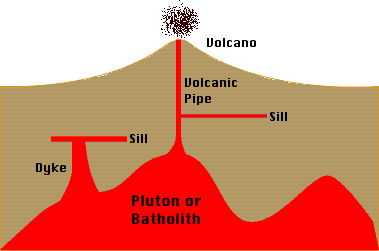
With recent activity at Mount St. Helens in Washington, you can watch a great NOVA documentary about its last eruption below.
Tuesday, May 6, 2014
Earthquake Notes for Friday's Quiz
These are notes you should put in your notebook for studying! I will check for them on Thursday before the quiz on FRIDAY (5/9). -Mrs. Loehe
Epicenter- The point of an earthquake on the Earth's surface, directly above the interior, where earthquake energy is released.
Primary (P) Wave- A P wave, or compressional wave, is a seismic body wave that shakes the ground back and forth in the same direction and the opposite direction as the direction the wave is moving. (Like a slinky.)
Secondary (S) Wave- An S wave, or shear wave, is a seismic body wave that shakes the ground back and forth perpendicular to the direction the wave is moving. (Like a wave in a pool.)

Fault- A fault is a fracture along which the blocks of crust on either side have moved relative to one another parallel to the fracture.

Tsunami- A tsunami is a sea wave of local or distant origin that results from large-scale seafloor displacements associated with large earthquakes, major submarine slides, or exploding volcanic islands.

Subduction Zone- The subduction zone is the place where two lithospheric plates come together, one riding over the other. Most volcanoes on land occur parallel to and inland from the boundary between the two plates.

Ring of Fire- The "Ring of Fire", also called the Circum-Pacific belt, is the zone of earthquakes surrounding the Pacific Ocean- about 90% of the world's earthquakes occur there. The next most seismic region (5-6% of earthquakes) is the Alpide belt (extends from Mediterranean region, eastward through Turkey, Iran, and northern India.

Subscribe to:
Posts (Atom)